
– Discussions with people in the
Japanese media localization industry –
Leah Bree Marshall
Can you tell us about yourself?
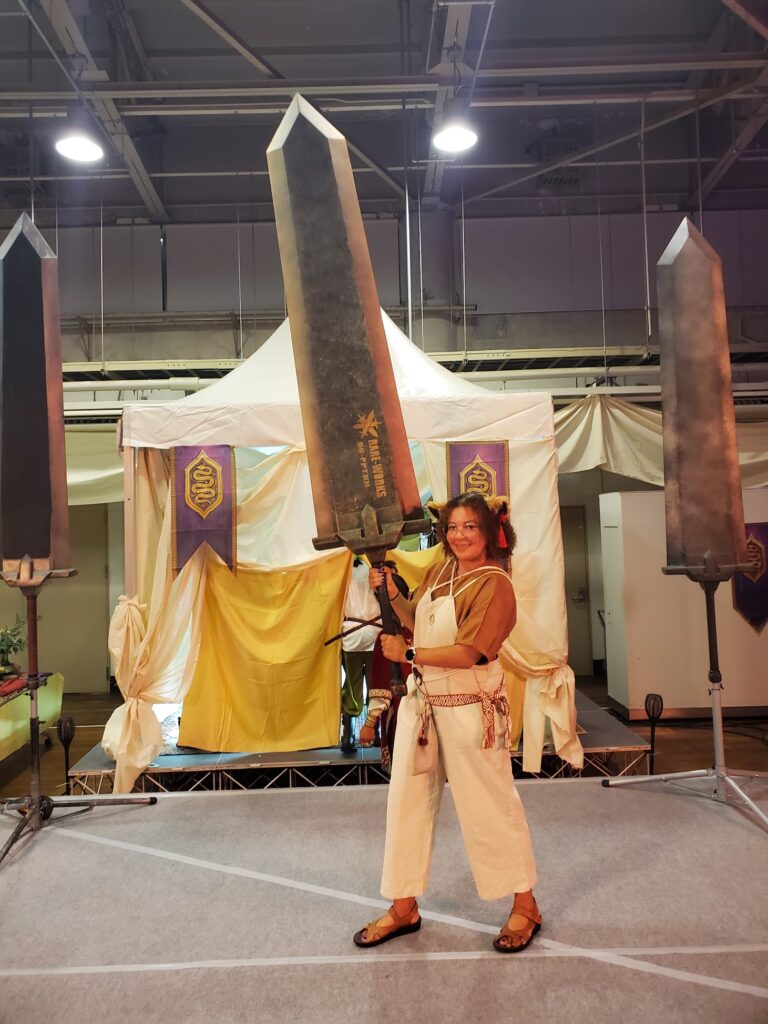
Hi, I’m Leah Bree Marshall, and I’m based out of Shiga, Japan. I’m a former Japanese-English freelance translator and editor, and as of recently a project manager at a localization company called Dragonbaby. I’m originally from California in the States but I’ve been living in Japan since 2016.
How did you get into localization?
During (what I thought was) my last year on the JET (Japanese Exchange and Teaching Programme), I went to a career fair where I met a local game localization company. The people at the booth were kind enough to invite me to a “Professionals in the Field Dinner,” where I met many amazing localizers.
I was gearing up to take the plunge…and then COVID happened. I stayed on the program for another two years until I hit the limit. I timidly reached out to all the connections I had made and not seen for the past two years, seeing if anyone would like to reconnect…and they did! They’re still one of my main sources of help and advice, and I’m still friends with them to this day.
I also credit one of those localizers who first introduced me to Dragonbaby. Dragonbaby gave me a lot of firsts: first time working on a very popular game, first time doing LQA, and now my first project manager role. Extremely happy to be a part of the team!
What have been some of the biggest challenges for you on your path to becoming a project manager?
Money. I was lucky enough to have met that company and passed their test, so at least I had an in when I was actually ready to start translating. However, passing the test does not mean immediate work. It took 6 months before I got my first project. The year after I left JET, I was doing eikaiwa work (private English lessons) on top of freelancing and yet still burning through my savings.
Unfortunately, that first year really tainted my experience, and when I started to get more projects, I found I couldn’t say no to anything. Even when I found a full-time job, I still had this starvation mindset. I always felt like my next project could be my last. I tried to take on anything that came my way and absolutely burnt myself out. Which would be another challenge—knowing my limits and knowing when to say no.
I wish I realized that my mental and physical health are also something to consider, especially mental health. If you run too far, your body will tell you immediately, but problems with your mental health seem to creep up in places you’d never think.
– Your Loc Work –
What do you enjoy working on most?
I love weird games or games with weird characters. I love snarky characters, especially. God, do I love writing assholes and villains. Maybe I’m just channeling my own thoughts, but sometimes I really do make myself laugh when I write a particularly biting snipe.
What have you been most proud of?
What I’m most proud of isn’t any specific game or project, but rather something I’ve done within my community. Since 2023, I’ve been running a monthly Kansai-based localization group called 関コーヒーLoc Cafe*! We’ve grown from 6 members to a whopping 50+ in our Discord server. We have members ranging from the aspiring to decades-long experienced professionals across many different media types.
The origins came from a previous incarnation that I attended all those years back when I first got introduced to the localization scene. During COVID, the organizer left Japan. When I left JET and contacted those localizers I had met before to see if they’d like to meet up again, unknowingly to me, that was to be the first meeting. Everyone was really happy to get out of the house and do some IRL socializing, they had thanked me for organizing and asked when the next one would be…and well. Here we are, 3 years later!
*Translator’s note: Ooh, I’ve always wanted to do one of these! The name is read Kan Kohi Loc Cafe. It’s a pun on the Japanese word for canned coffee (缶コーヒー/ kan kohi) and the first part of the kanji for Kansai (関西). I take no credit for the name; that honor goes to one of our members!
Is there something you worked hard on that you think no one noticed?
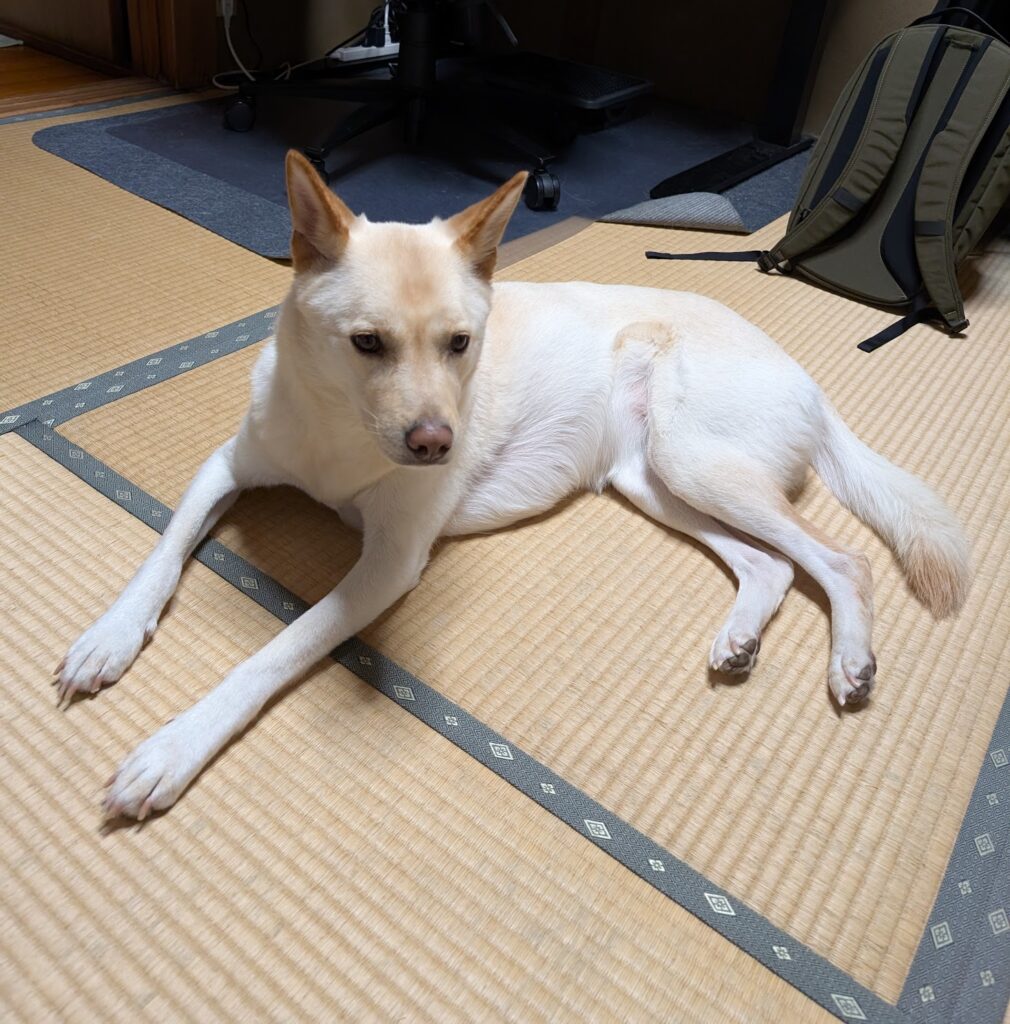
I have an annoying coworker in my office who constantly tries to interrupt my work and demands that I go on walks with them twice a day, rain or shine. It’s getting to the point I might have to call HR for power harassment. (I work from home.)
If you could do anything what would you love to do or try out?
I always wanted to get involved in interpreting for students or visitors from abroad. Something to just elevate their experience just a little more. Even if it’s just a walking tour. I would really like to get out of my house more!
– Study and Inspiration –
Is there anyone or anything you draw inspiration from?
My partner, Alex. He is a huuuge linguistic nerd. He’s always telling me some fun fact about etymology or grammar. I love that we can nerd out about different phrases that come up in both our workplaces. He teaches at a Jr. High School/High School combo, so he is a fountain of knowledge about current slang in both English and Japanese, which is actually extremely helpful when translating games. There are so many characters that are teens!
What tools/resources do you recommend to other translators?
I love the Pomodoro method for time management. There are a ton of apps that have it (even my sports watch has a Pomodoro app), but I like the minimalist pomofocus.io for my daily tasks.
I also got recommended Toggl Track, and I used it a lot when I was a freelancer to track how many hours I was putting into a particular file or project and to figure out whether the rate I charged was worth it based on how much time it took.
What do you do to hone your skills?
Read, read, reaaaad! Both in English and Japanese. Someone once told me translation isn’t just about how well you understand the source language; it’s about how well you write. And you can’t write without reading. I learn so many turns of phrases, expressions, styles of voice, and characterization by reading. I’d say books are truly essential reading (heh) for this industry.
If you could share one piece of advice for aspiring media translators/editors, what would it be?
If you’re worried about your language ability or your writing skills, those will take time to develop. What you can make yourself a “master” of right away is your soft skills: Be Communicative, Be Punctual, Be Reliable.
These will absolutely help you stand out from the crowd. As a project manager, no matter how good the translator may be in their writing skills, if they’re an asshole, I’m not going to work with them. Same goes for people who seemingly drop off the face of the earth when I need to talk to them, or those who think deadlines are merely a suggestion.
– The Industry in General –
What do you think people don’t know about localization that you wish would?
Just because you see a line doesn’t mean the original translator wrote it or wanted to write it that way. Not to get too into the weeds in the debate of good or authentic translation, but a lot of times, players have absolutely no idea what goes on behind the scenes of some of their favorite projects.
Sometimes, someone up high has certain “opinions” of how things should be translated, even if they have no background in translation or even a good proficiency in the target language. Sometimes they want the stilted, awkward phrasing because it makes sense to them.
Dropping or not dropping of honorifics, changes in a character’s speech or name, 9 times out of 10, it came from up high rather than the translator you’re about to put on blast on the Website-That-Will-Not-Be-Named.
How do you think the industry will change in the future?
In the Age of AI, I think there will be a push for human-crafted translation. Unfortunately, a lot of how our society works is trying to wring out the most money with the least amount of effort–creativity or soul be damned.
There will always be a market for the muck and sludge that is machine translation, but there will always be a place for writing told from the heart for humans, by humans.
Localization was never meant to be a one-to-one translation. Localization is about bringing stories to audiences beyond their original language demographic. It is an art, like anything else, and art will always, always persevere.
– Website/Social Media/Contact Links –
Linkedin: Leah Bree Marshall